fullsweep • ux design
Eliminating the friction and mental overwhelm for young adults to build consistent habits.
Overview
What's the context?
79% of people strongly agree that a clean home helps them feel their best, both mentally and physically. Yet, as lives become busier, people often fall out of their cleaning habits. With 82% of people citing school, work, or other responsibilities as the main reason, this makes it difficult to manage the simple tasks that contribute to a peaceful home environment. What is often seen as a minor inconvenience, like a cluttered room, is rarely recognized for the toll it takes on a person's mental health which leaves them overwhelmed.
The Solution
Enabling young adults to build lasting habits for a cleaner space.

★
Adaptive Habit Building
Instead of rigid schedules, FullSweep offers personalized, bite-sized tasks that adapt to users' schedules and energy levels. The app learns from user behavior to suggest realistic cleaning actions that fit into busy lives.
★
Positive Encouragement
Instead of rigid schedules, FullSweep offers personalized, bite-sized tasks that adapt to users' schedules and energy levels. The app learns from user behavior to suggest realistic cleaning actions that fit into busy lives.
Core Flows
The Final Product
!!
Objective: Address Challenge of Consistency
Pain Point: Existing rigid, traditional systems are not flexible enough for their lives, making them feel like they failed trying to stick to an unrealistic schedule.
Our Solutions:
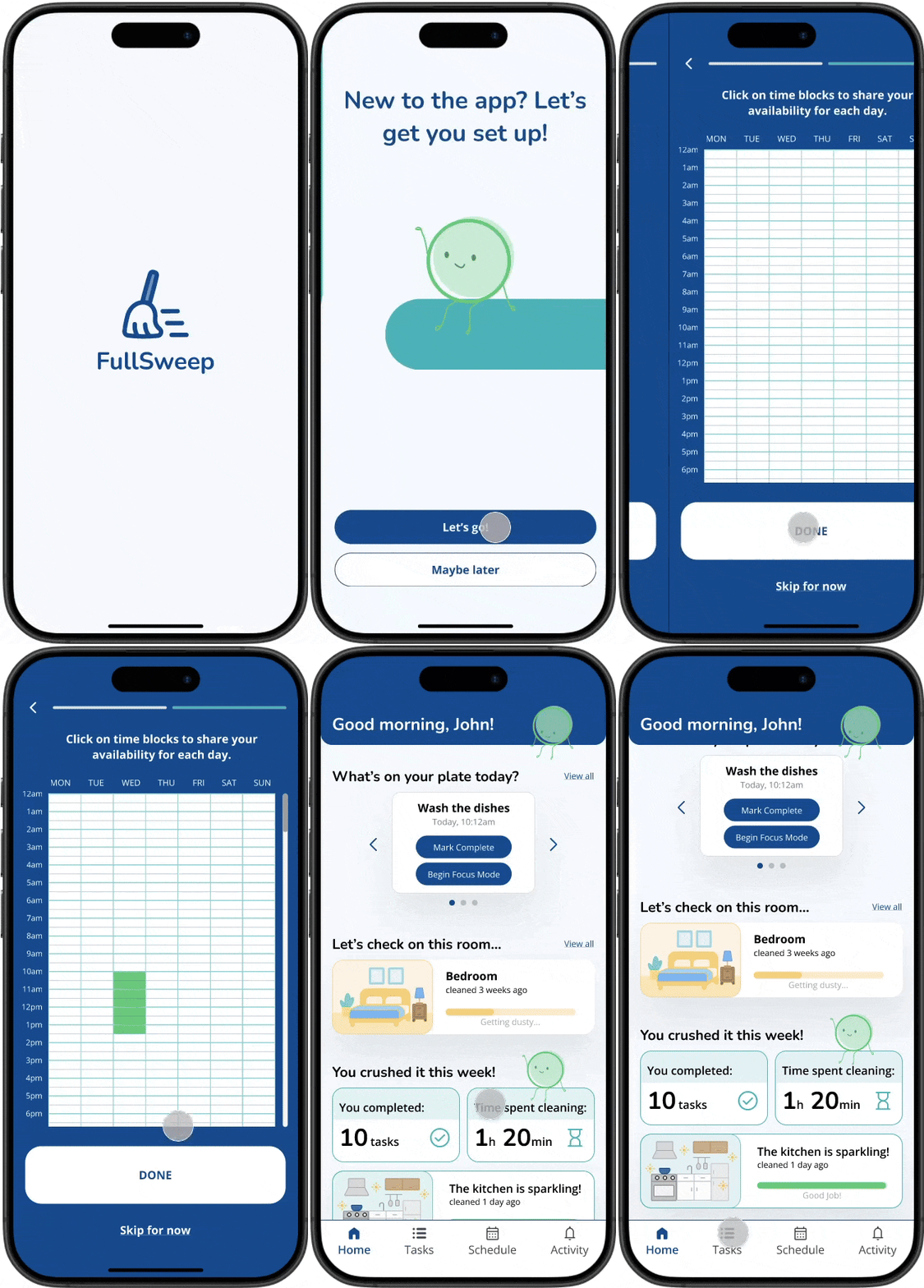
Homescreen Overview: Users see only their immediate priority task upon opening the app, reducing overwhelm and providing clear direction for what to focus on during busy weeks.
Adaptive Scheduling System: Users can mark their time blocks as "busy" or "free," allowing the app to intelligently schedule cleaning tasks only during available windows, ensuring the system works around their unpredictable academic and work schedules rather than against them
!!
Objective: Addressing Users’ Overwhelm of "Getting Started”
Pain Point: Users feel paralyzed by the sheer scale of a messy space, which creates a sense of dread and anxiety. This initial friction is a major barrier that prevents them from even beginning.
Our Solutions:
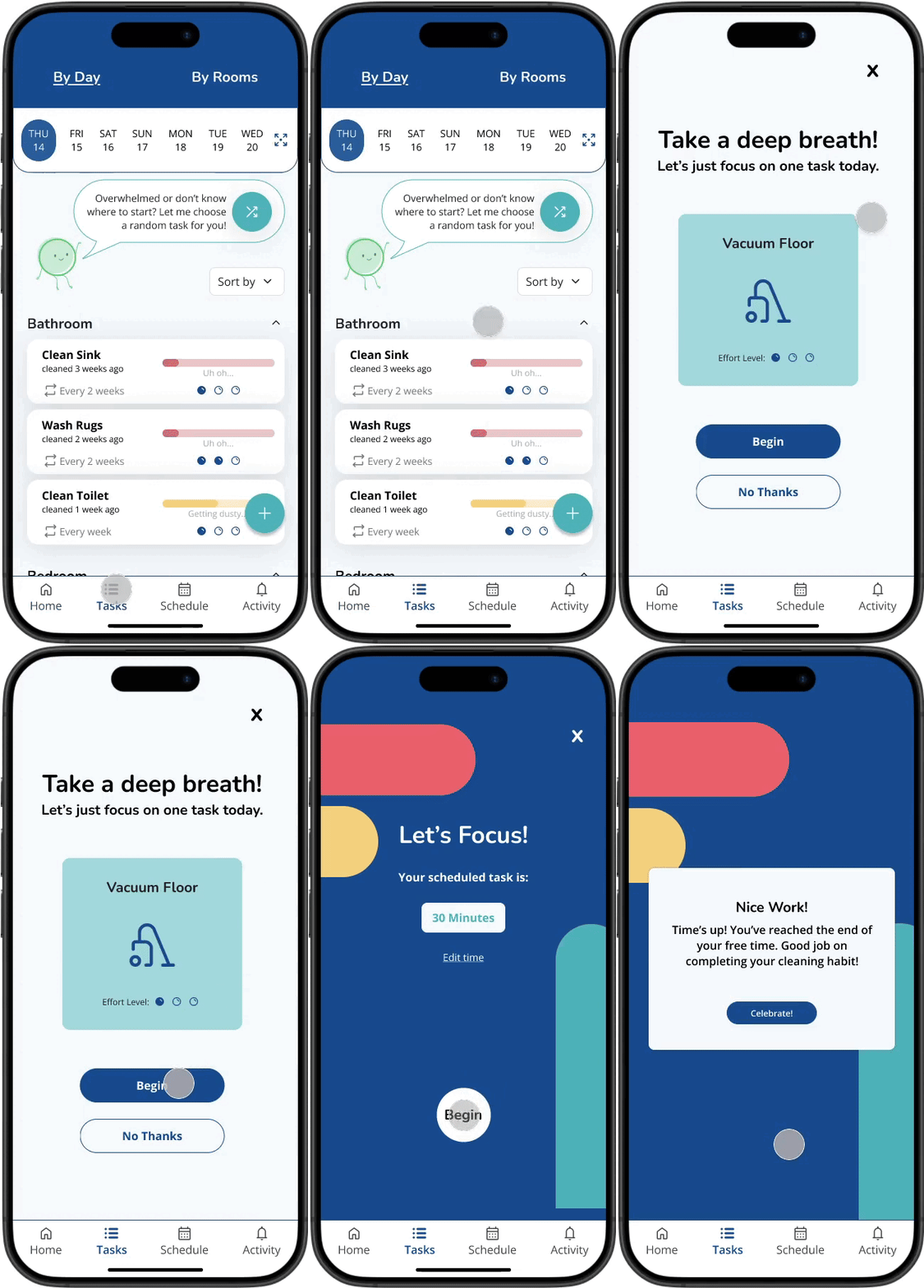
Focus Mode: Provides users with a clear start and end point for each task, eliminating decision fatigue and creating manageable, bite-sized cleaning sessions that feel achievable.
Auto-Sanitize for Overdue Tasks: When tasks become overdue, the system adjusts expectations rather than showing failure, maintaining user confidence and reducing stress around missed deadlines.
!!
Objective: Address Lack of Positive Reinforcement
Pain Point: Current cleaning apps only offer a checkmark or a broken streak when users fail, and long-term habits need more encouragement than that.
Our Solutions:
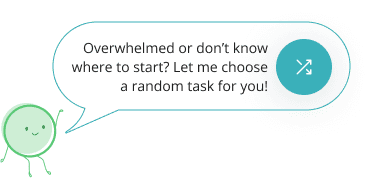
Adaptive Encouragement: The system provides supportive messaging that acknowledges life's unpredictability while maintaining motivation.
Progress Celebration: Tasks completed through Focus Mode provide immediate positive feedback, building momentum for continued habit formation.
Secondary Research
Insights from the Community
To truly understand the struggles our users face, we dove into online communities such as online forums and articles where we found a shared sense of frustration.
“My partner and I spent our whole Sunday deep cleaning our apartment and how clean it is now is bringing us so much joy! It's made me wonder what quick cleaning things you do every day which make the biggest difference in your home looking cleaner for longer.” - Reddit user
“Put things back in their place! I’m so messy but spend so much time cleaning.. the only thing that helps me is putting things straight away back to their place, bc if I won’t they’ll accumulate on the table/chair and then you’ll have to put more effort into cleaning” - Reddit user
We learned that for many, a messy space is a symptom, not the root cause. A simple, 10-15 minute daily 'tidy-up' is often enough to make their weekly cleans less stressful and even improve their mental health.
Problem Statement
The Deeper Impact of Clutter
★
In the face of being overwhelmed by busy schedules and the mental toll of a cluttered home, students and young adults especially become trapped in a cycle where clutter creates overwhelming stress that prevents them from taking the small daily actions that could restore both their space and overall wellbeing.
Our focus: We specifically targeted students and young adults (ages 18-26) because this demographic faces unique challenges:
First time living independently without parental structure
Irregular schedules due to academic demands
Limited financial resources for cleaning services or organizational systems
High stress levels that impact motivation and energy
So, how might we empower young adults to build consistent habits by supporting them in balancing their responsibilities while maintaining a clean environment?
User Research
Key Insights
What do young adults think about cleaning and their habits? Through comprehensive research with 61 participants and 9 user interviews, this is what their experiences told us:
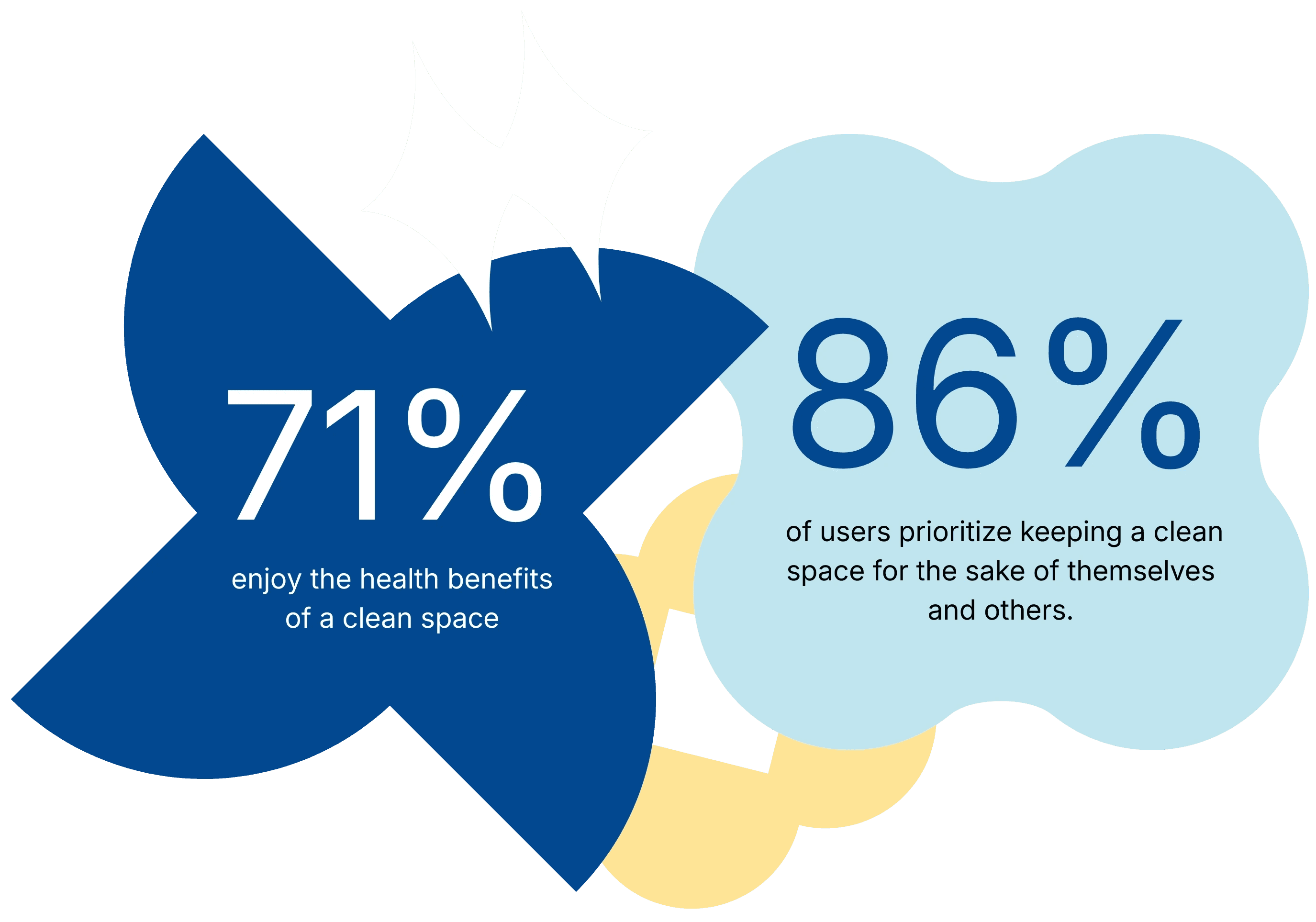
Based on these results, we then identified three major pain points and brainstormed solutions:
Challenge of Consistency
Rigid schedules feel unrealistic, making users abandon them.
Overwhelm of "Getting Started”
Initial dread and friction prevent users from beginning.
Lack of Positive Reinforcement
Apps focus on failures; users need more encouragement for long-term habits.
Introduce an adaptive scheduling system that lets users mark busy/free times for flexible task fitting.
Enable a focus Mode that gives clear start/end points to eliminate decision fatigue.
Create engagement tactics that enable long-term, healthy satisfaction.
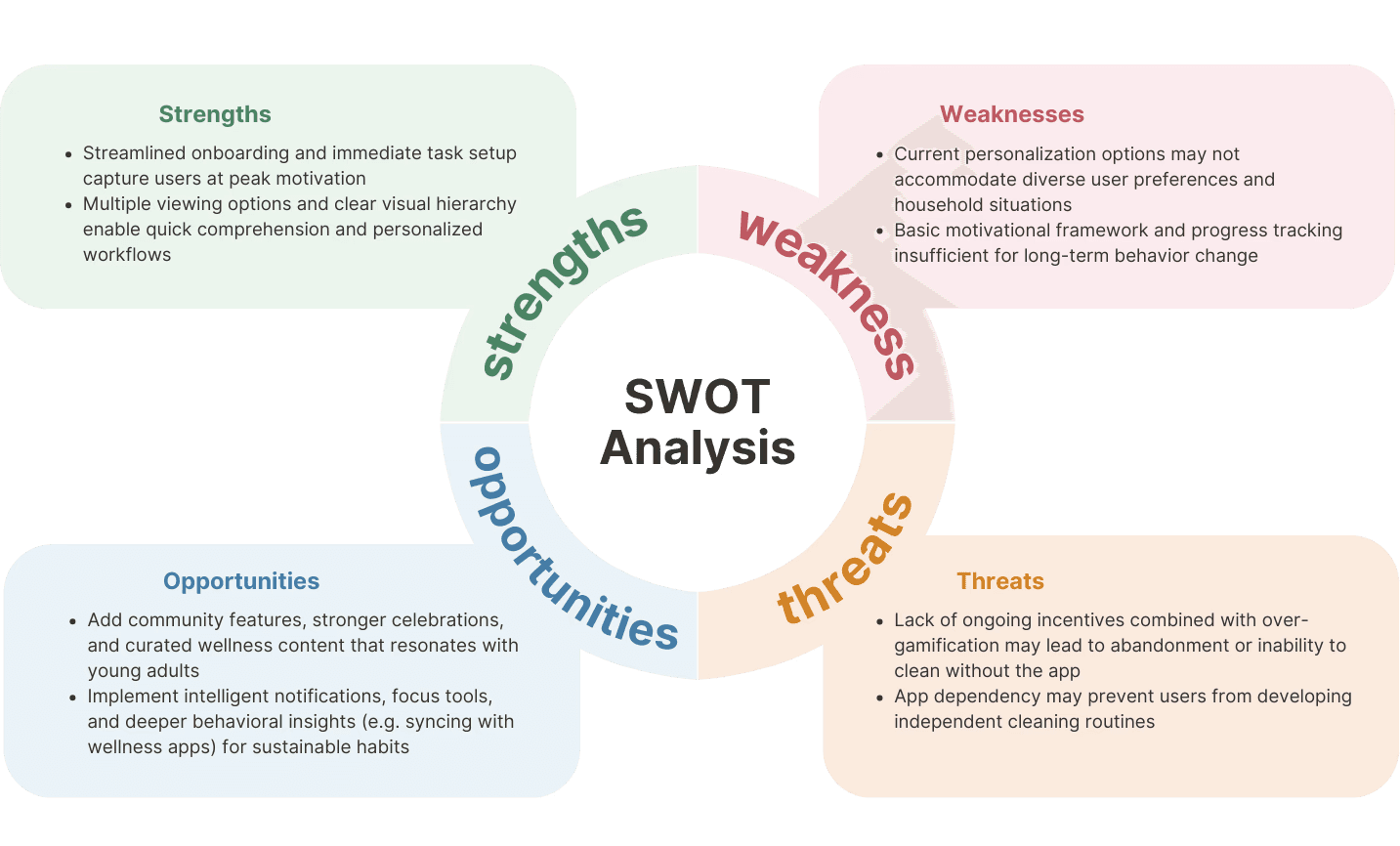
SWOT Analysis
Before moving forward, we needed to honestly assess our ability to serve our users well. We identified our unique position in a problematic market landscape.
Ideation
Iterations
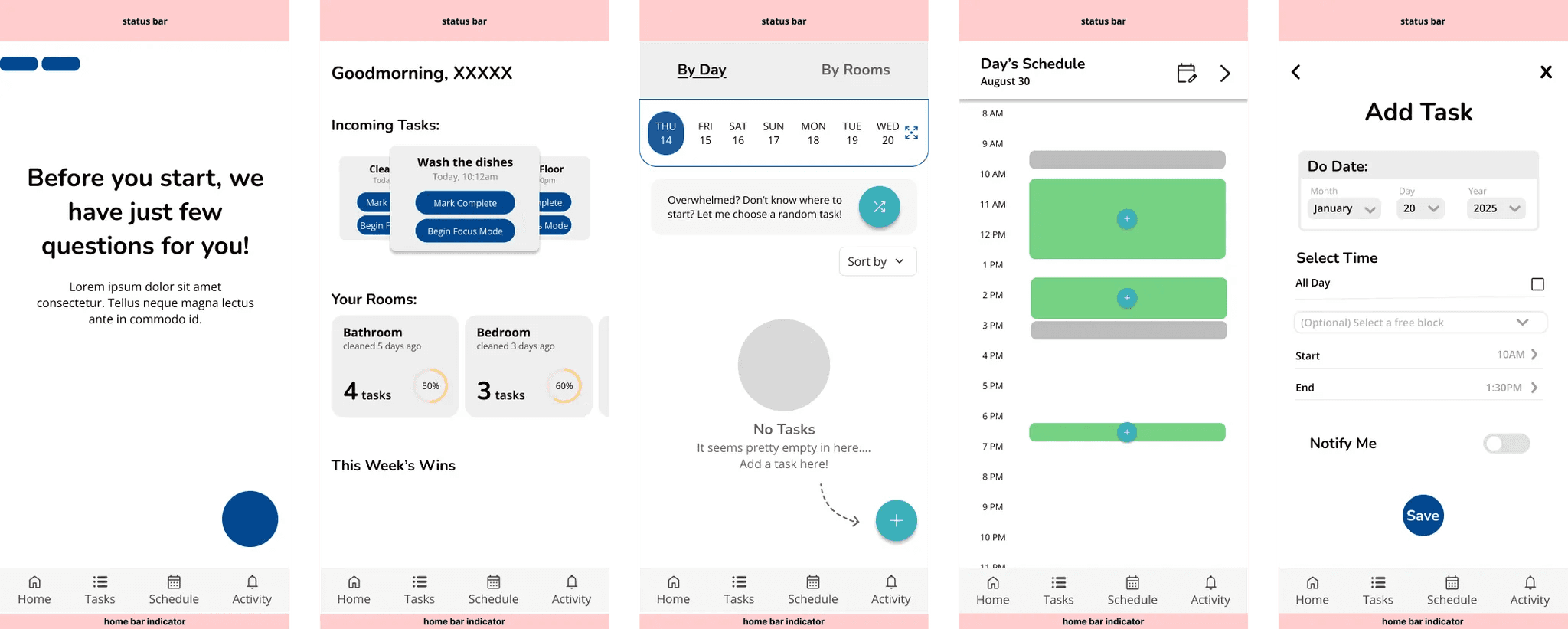
With the landing page being the first page they see after onboarding, we focused on making iterations when necessary to reduce cognitive load and create immediate emotional safety on entry.
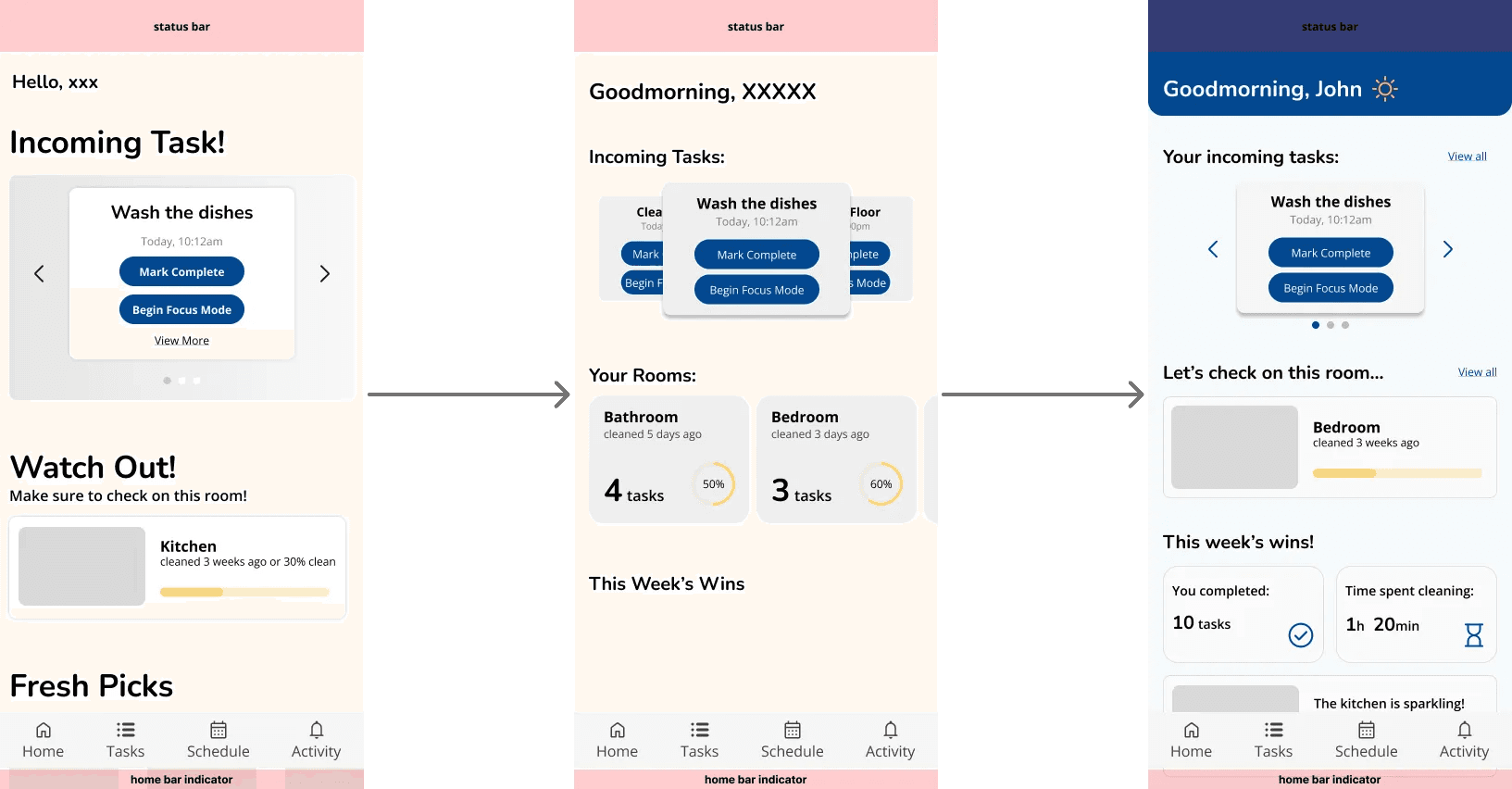
With our home page serving as our app’s entry point, the layout for this screen was crucial to keeping our user engaged with visual clarity.
We evolved from a single-task focus to a card-based system that allowed users to see their progress without feeling bombarded.
Prototyping and Testing
Usability Testing
We conducted 4 interviews, with the help of otter.ai to help us with recording the transcript, and found these insights which we used to inform our future designs through iterations:
"If this is the main function that I'm using this app for, I would probably prefer the create a task button to be on the same screen as where you land, like the homepage, because that means... That's like one less click I would have to do to create a task.”
“I’m used to writing out my day in Notes or Google Docs because it allows me to brain dump more easily without the burden of filling out information and adjusting schedules in Calendar. With this app, I like that I can quickly filter things and write out what reminders I need. I’d also prefer that the app notifies me because I know that’s not something I can get from using Notes."
★
Overall Sentiments…
While users found the overall visual layout appealing and how our core features were easy to learn and use, they needed clearer visual cues and more intuitive navigation elements to reduce confusion and cognitive load.
Reflection
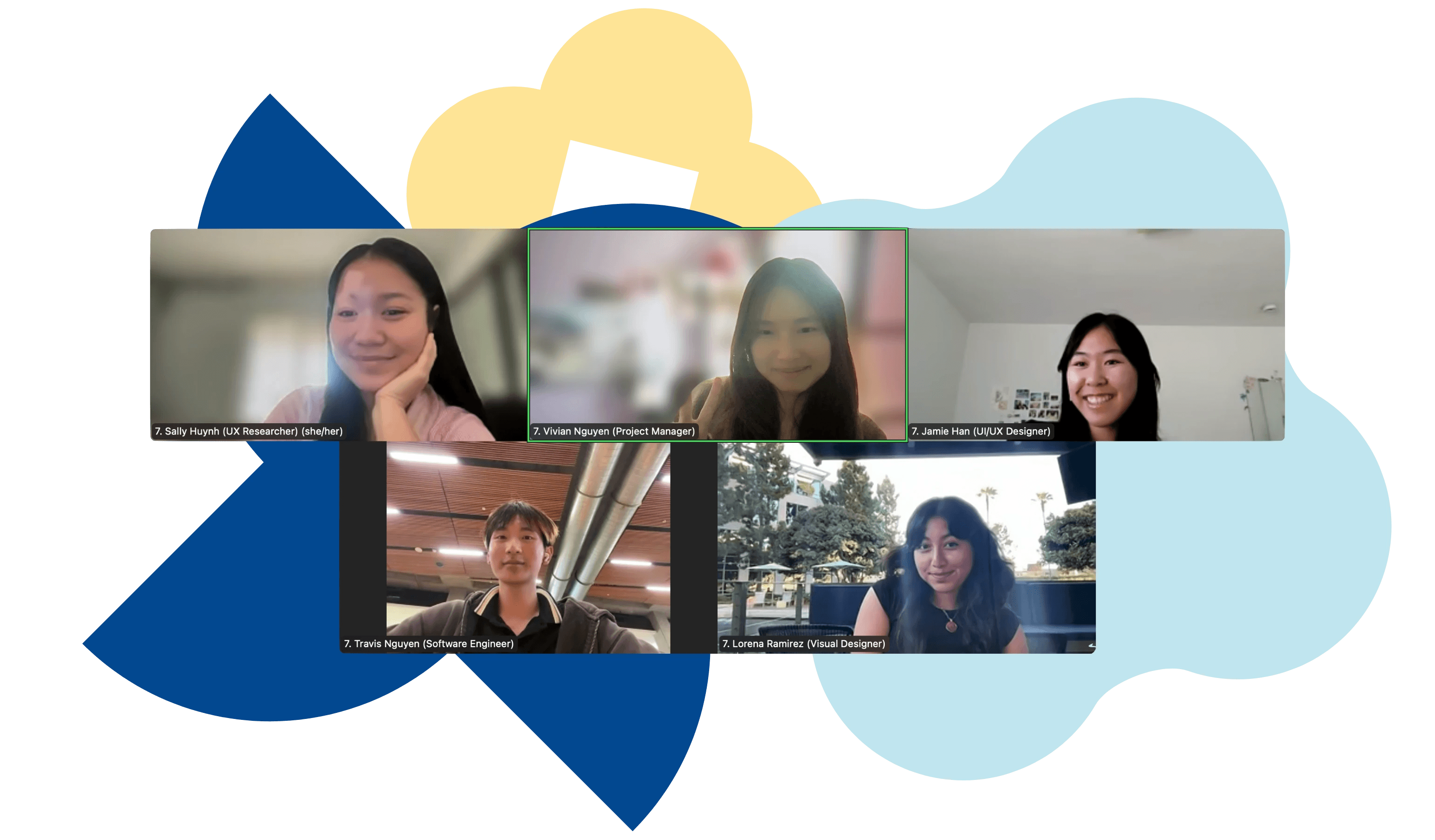
SO SO SO much love to my team + mentor, Michelle! ❤︎ ❤︎ ❤︎
As a new project manager leading my first product through the complete development lifecycle, I discovered that managing the journey from initial user research to final implementation requires constant adaptation and collaboration at every stage. Successful product leadership means balancing user empathy with strategy while making sure every team member understands how their work connects to the broader vision.